
Global Salesforce transformations are frequently compromised by a fundamental misunderstanding of delivery risk. Most enterprise organizations fall into one of two traps. They either adopt a rigid Waterfall approach that becomes obsolete by the time of deployment or they embrace a chaotic Agile model that lacks the architectural governance required for complex CRM environments. When a project of this scale fails, the cost is not merely the wasted budget. The true cost is the erosion of data integrity, the creation of technical debt, and the loss of sales productivity across the global footprint.
Traditional Big Bang deployments rely on the assumption that requirements defined in month one will remain valid in month twelve. In a global Salesforce environment involving complex sync rules, custom objects, and multi-platform integrations, this rigidity creates friction. By the time the system is ready for launch, the business logic has often shifted, leaving the organization with a tool that solves yesterday’s problems.
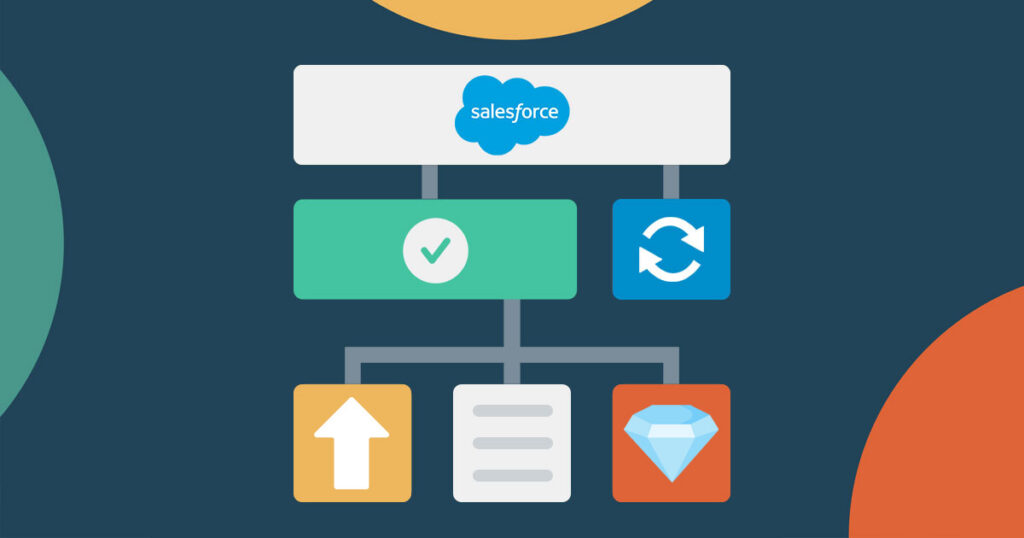
Our proprietary CRM Forge methodology introduces Structured Agility as the antidote to transformation failure. This is not Agile for the sake of speed, but a disciplined framework that prioritizes Alignment, Execution, and Value. We establish immovable architectural guardrails around data hygiene and system identity resolution while allowing the functional requirements to evolve through iterative sprints. This ensures the foundation is enterprise-grade while the features remain relevant to the end user.
The first pillar of our methodology focuses on strategic alignment before a single field is created. We move beyond the technical ticket to understand the revenue lifecycle. By defining ownership transfers and data governance standards at the onset, we prevent the “Frankenstein Stack” that occurs when individual business units demand siloed customizations. Structured Agility requires that every iterative change serves the broader architectural roadmap.
Rather than waiting for a global go-live date, we focus on delivering high-impact wins in a Crawl, Walk, Run sequence. This allows the organization to validate the CRM logic against real-world sales data early in the process. When we identify friction in field-level governance or API limits, we pivot within the sprint. This iterative feedback loop ensures that the final global rollout is a refinement of a proven system rather than a high-stakes gamble.
The transition from operational chaos to strategic clarity requires a departure from traditional project management. Structured Agility allows global enterprises to de-risk their Salesforce investments by combining the predictability of a strategic roadmap with the responsiveness of iterative delivery. The result is a high-performance revenue engine that is built for today’s operational reality and tomorrow’s growth.